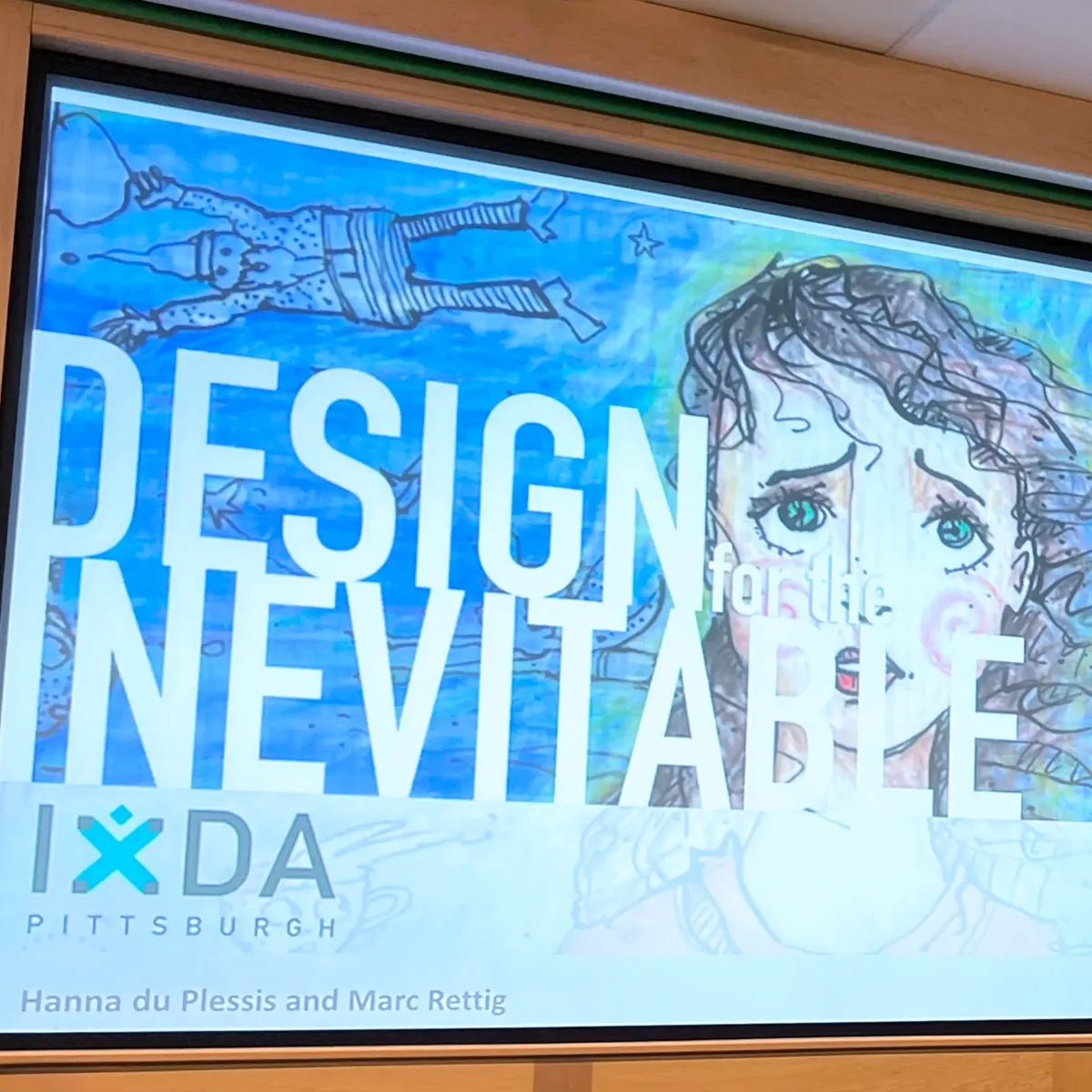
Event: Design for the Inevitable
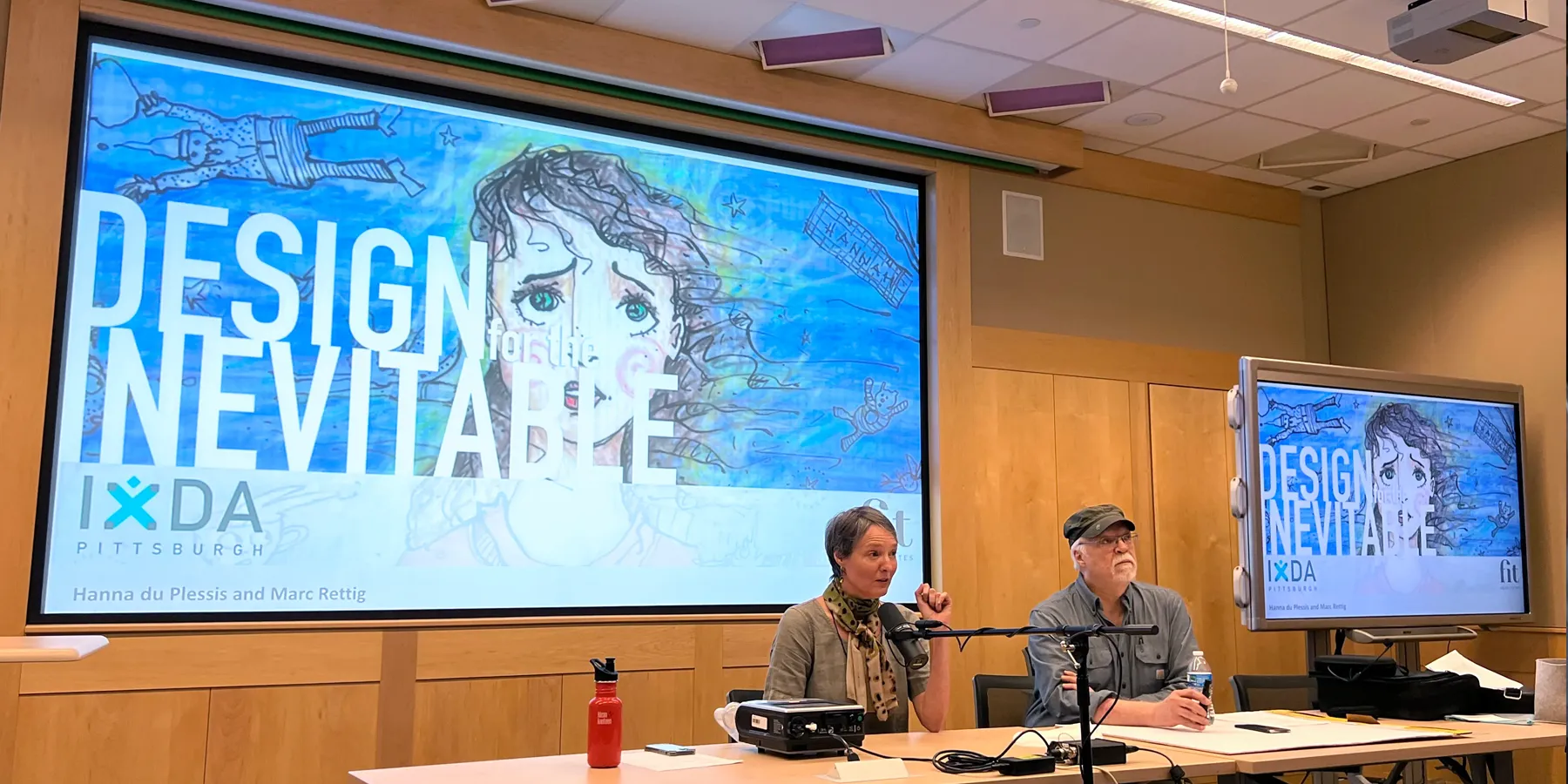
EVENT
Design for the Inevitable
Design for the Inevitable
Event summary and photographs by Raelynn O’Leary
Interaction Design Association, Pittsburgh
July 2023
"The topics of loss, grief, and death might seem dark, but our cultural avoidance of life's inevitable griefs has closed us off from whole territories of connection and wonder."
Hanna and Marc facilitated a conversation with Pittsburgh’s design community about what “human-centered” means when we’ve left out death, loss, and grief—universal parts of human experience.
The invitation asked: Something is knocking on our door. Something wants to come in and join us for dinner. Its knocking may make us uncomfortable or even frighten us. And answering the knock might be an expansive and joyful surprise.
This was the work Hanna had been doing for years—teaching people to face what can’t be avoided, to stay in the room when everything in you wants to leave. She brought the same practices she’d used in racial healing work, in teaching Design for Social Innovation, in learning to live while dying: making space for discomfort, staying with what’s difficult, finding possibility in the shadow.
The workshop moved through an arc—from comfort to discomfort to possibility. First, participants named what’s easy to talk about: home renovations, sports, food, hobbies. Then came the unwelcome topics, surfaced through playful chaos that reset the room’s energy before the difficulty. The invisible was made visible—participants seeing that they weren’t alone in carrying experiences like grief, addiction, poverty, abuse.
Hanna shared her story: learning to love both the light and shadow sides, because “I am the shadow side of the paper, and I’m dying. My choice is to learn to love them as much as the others.” She asked: “How do I and we enlarge ourselves enough so we can welcome all of the human experience?”
The evening closed with possibility—what becomes available when we stop facing away from what’s hard? What sources of connection and wonder live in the topics we’ve exiled?

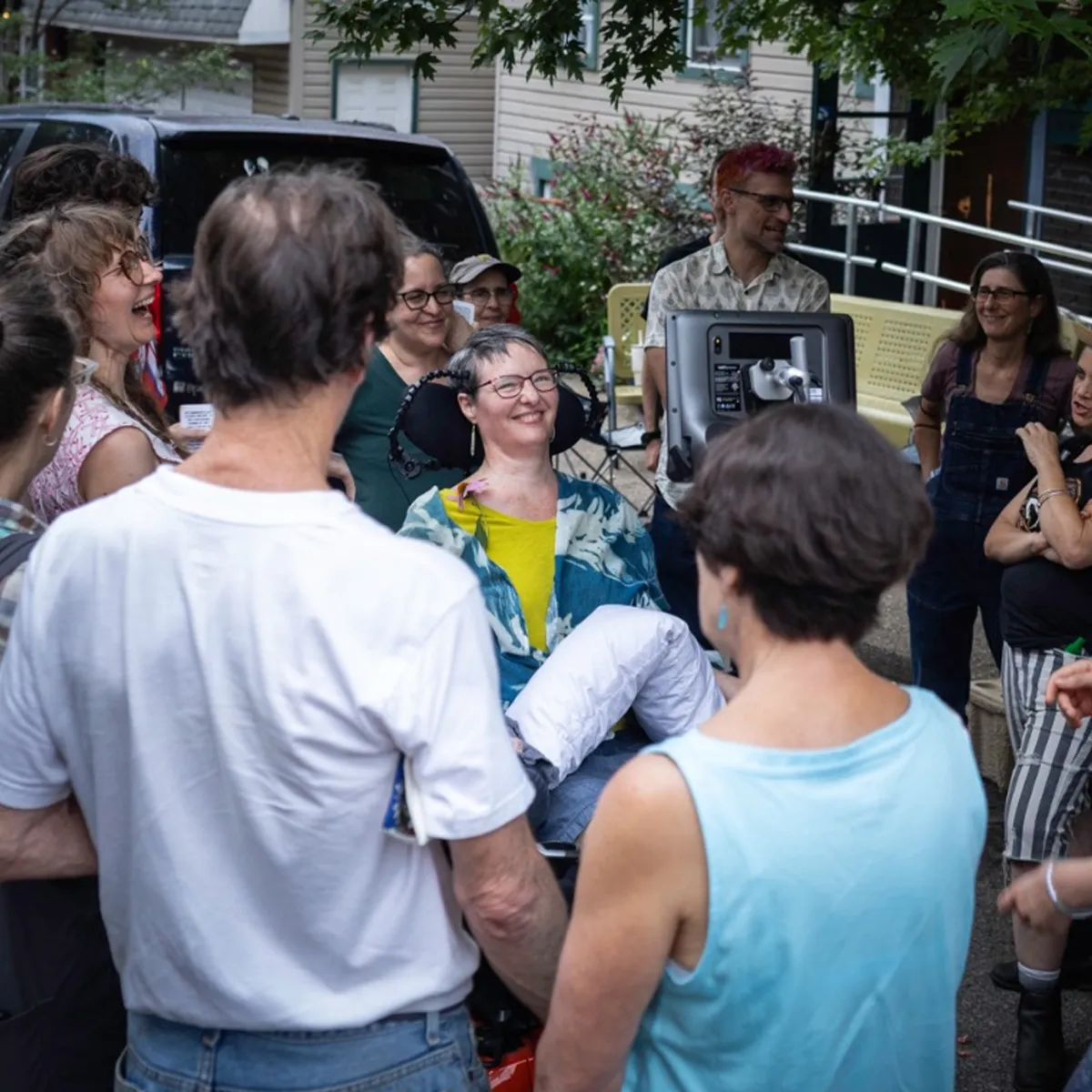
Ongoing: Maranie Staab's photo documentary
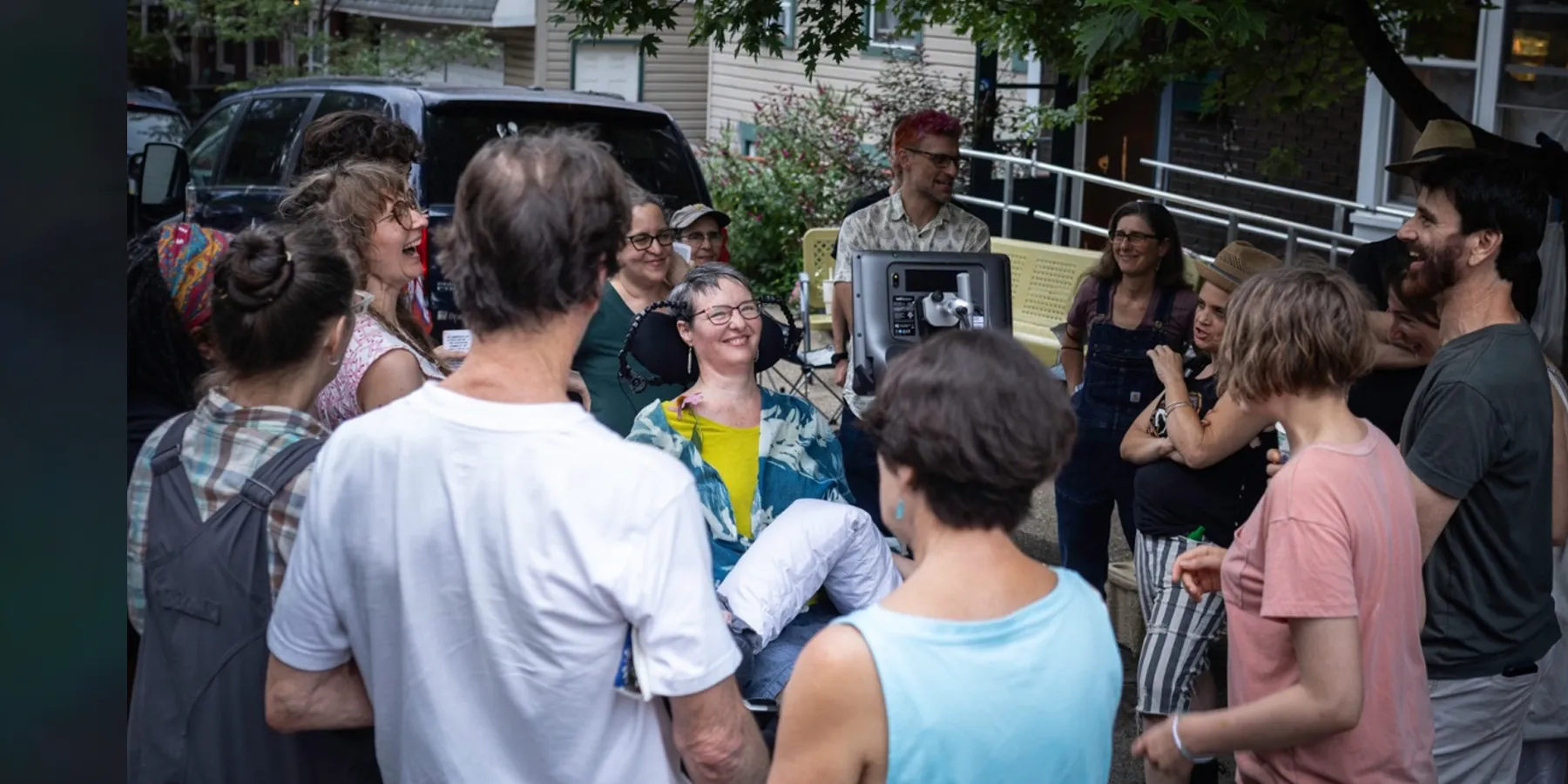
DOCUMENTARY PHOTOGRAPHY
Maranie Staab: Photo Documentary
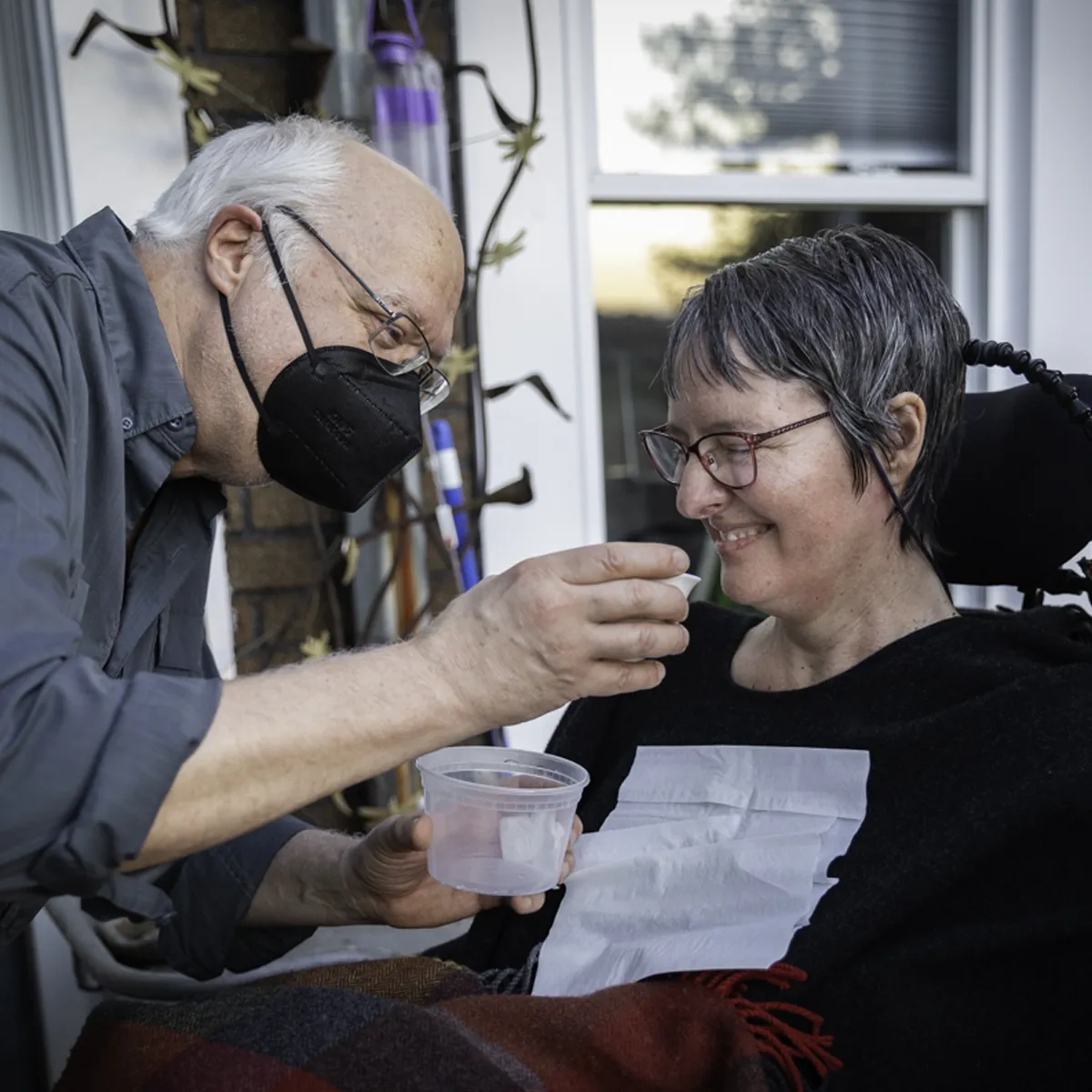
Since her ALS diagnosis, Hanna has lived into an ethos of “stubborn joy” and a will to “live fully while dying.”
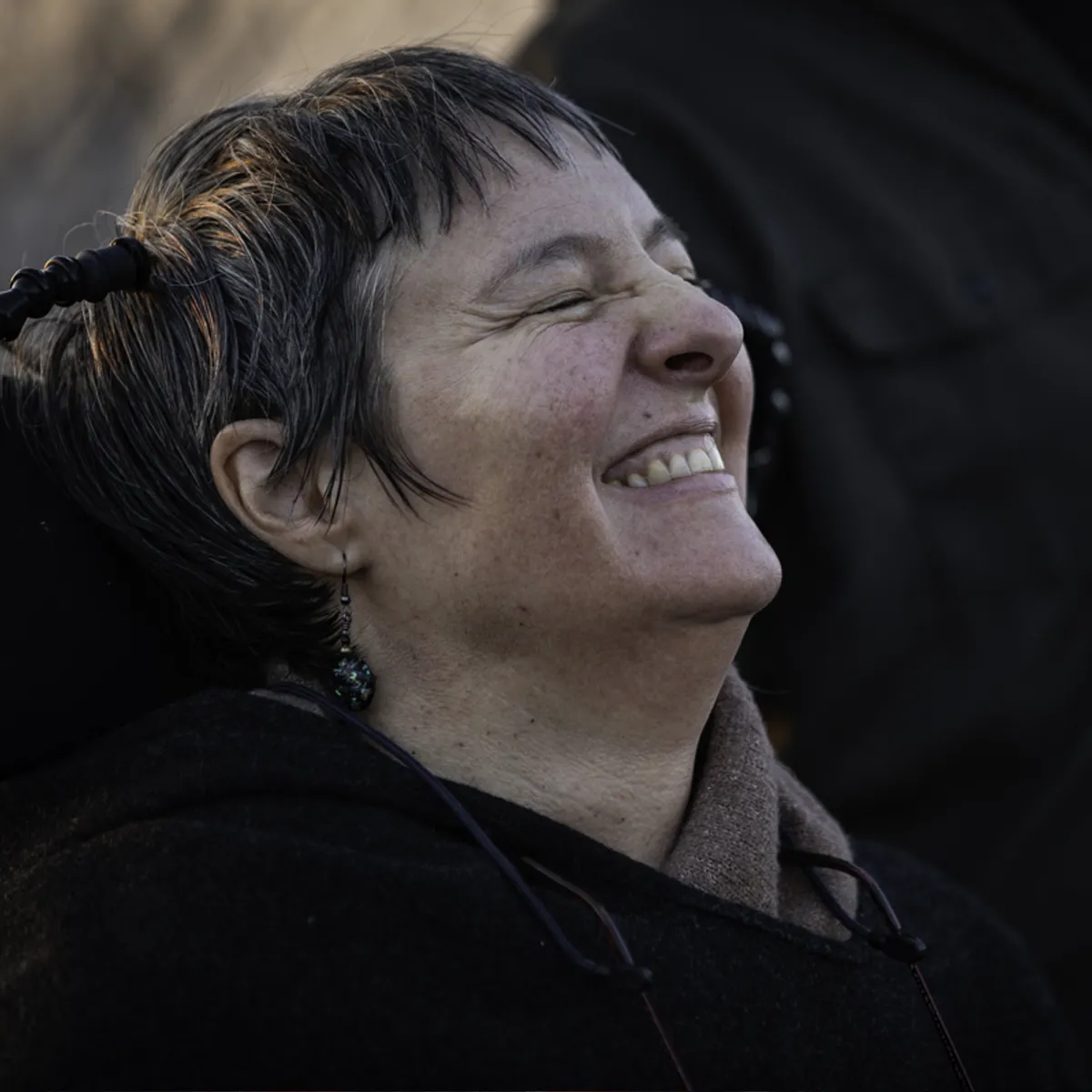
…We reminisced about that March moonrise and spoke of returning to her favorite spot. A long pause carried unspoken questions about time, energy, and health. We all sensed such adventures might belong to the past. Hanna cut through the silence with a promise: “You’ll find me there.”
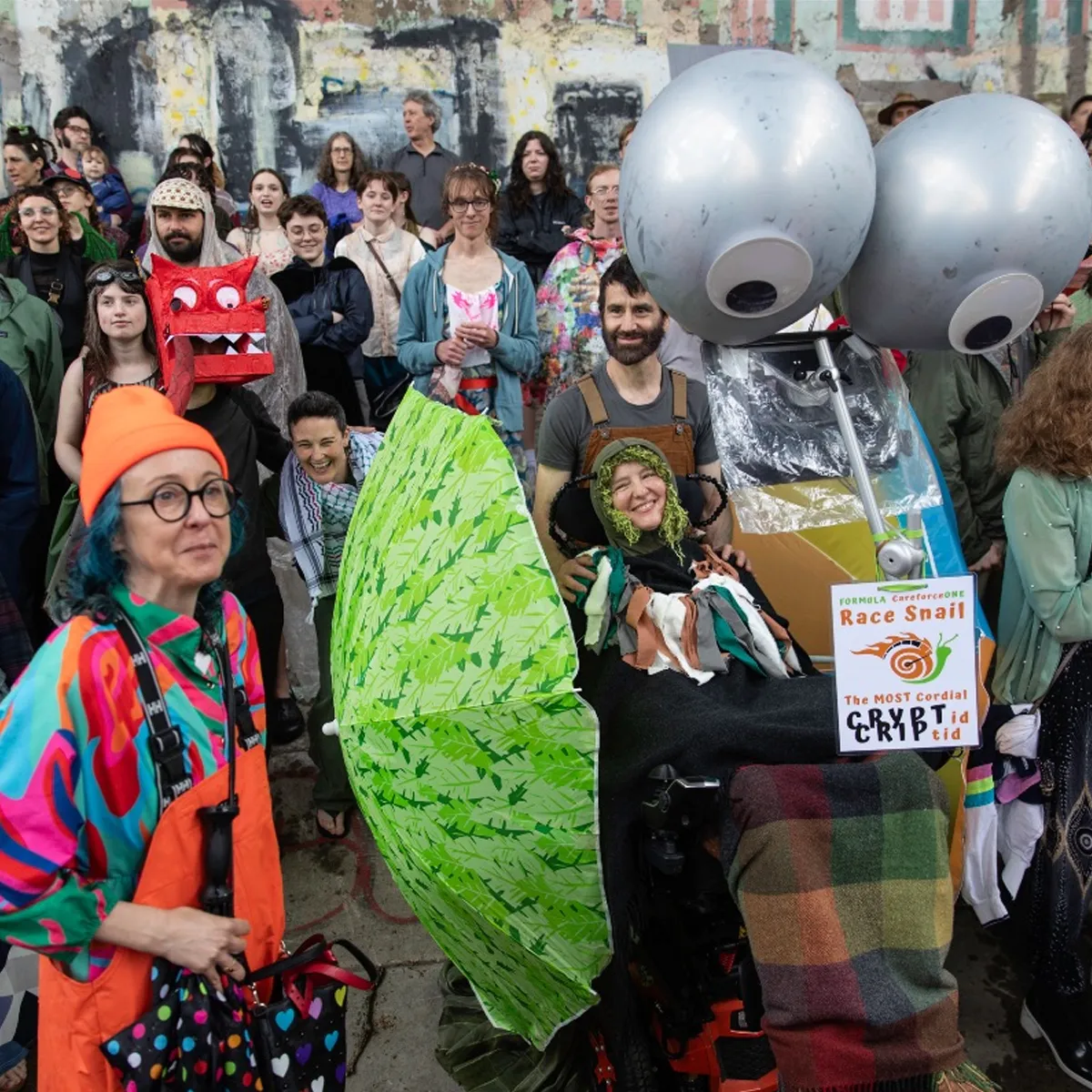
How love in action provides an example of what is possible as we “walk each other home.”
“Imagine if tomorrow everyone on the margins woke with garlands of flowers and prayers and incense around them. Imagine their joy as they stepped or rolled or stumbled into a world so tightly woven together in reverence for life that they never feared slipping through the cracks ever again.”
Hanna du Plessis, in Bedsores and Bliss
For nearly two years Maranie Staab has continued to document moments of life for Hanna and the Careforce community—an ongoing visual witness to what it looks like to live fully while dying.
The images show what most people never see: morning routines with caregivers, celebrations of small victories, bodies holding bodies, community showing up day after day. Hanna laughing. Hanna exhausted. Hanna with ventilator, communication device, the people who lift and turn and feed and love her. The photographs refuse to look away.
This isn’t tragedy documentation. It’s life documentation—not sanitized, not romanticized, but real. The images hold both the devastation and the stubborn joy. Maranie’s lens shows “love in action” meeting the daunting tasks inherent in dying, wrapping Hanna in what she calls “an expansive, loving embrace.”
The ongoing series provides what Maranie describes as “an example of what is possible as we ‘walk each other home.'” It’s a chronicle of chosen family stepping in where systems fail, of community as antidote to hiding disability and death.
Magazine Feature: Capturing Stubborn Joy
MAGAZINE FEATURE
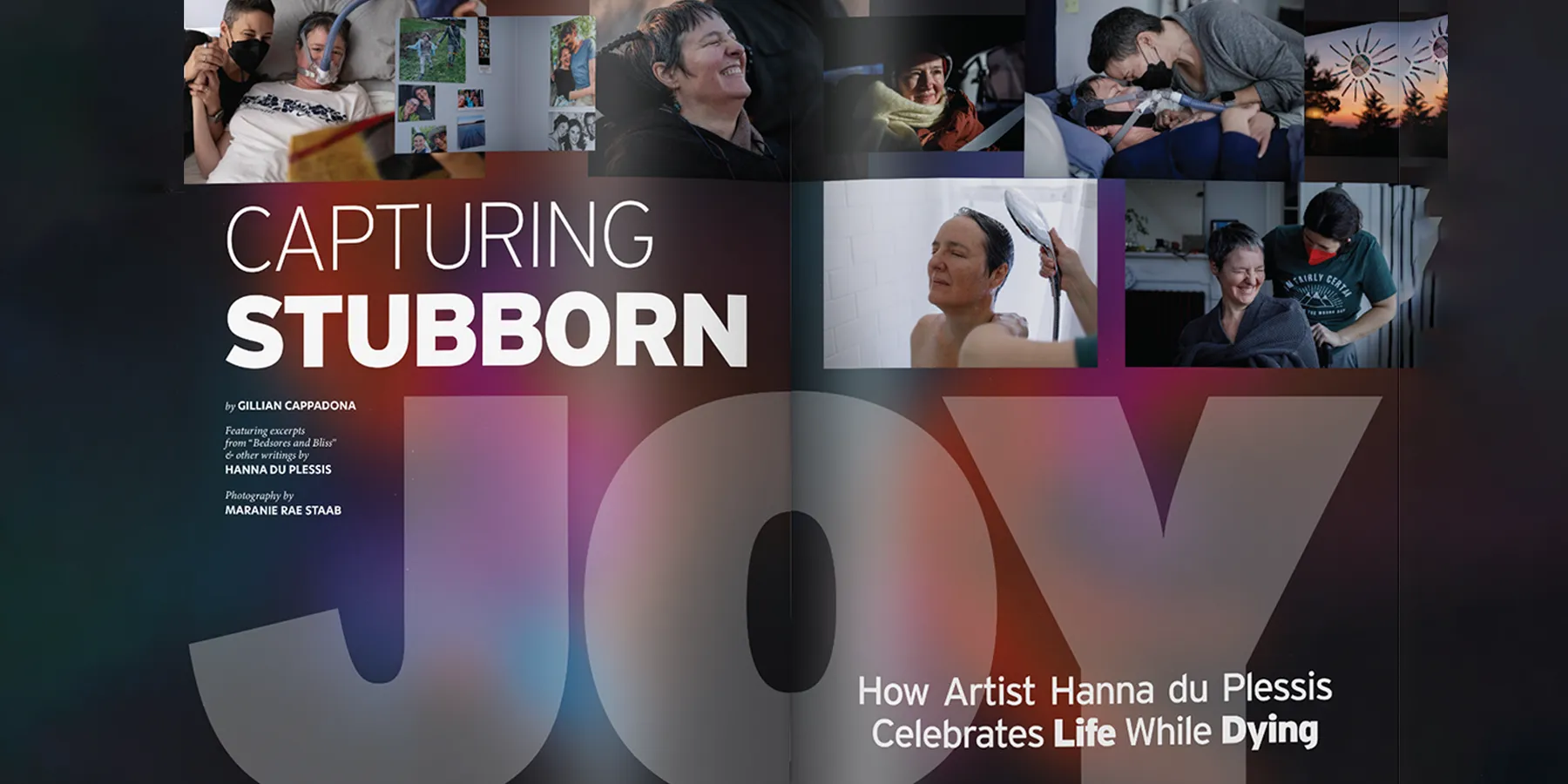
Capturing Stubborn Joy
Capturing Stubborn Joy
YNST Magazine | November 2025
Written by Gillian Cappadona
Photography by Maranie Rae Staab
How Artist Hanna du Plessis Celebrates Life While Dying
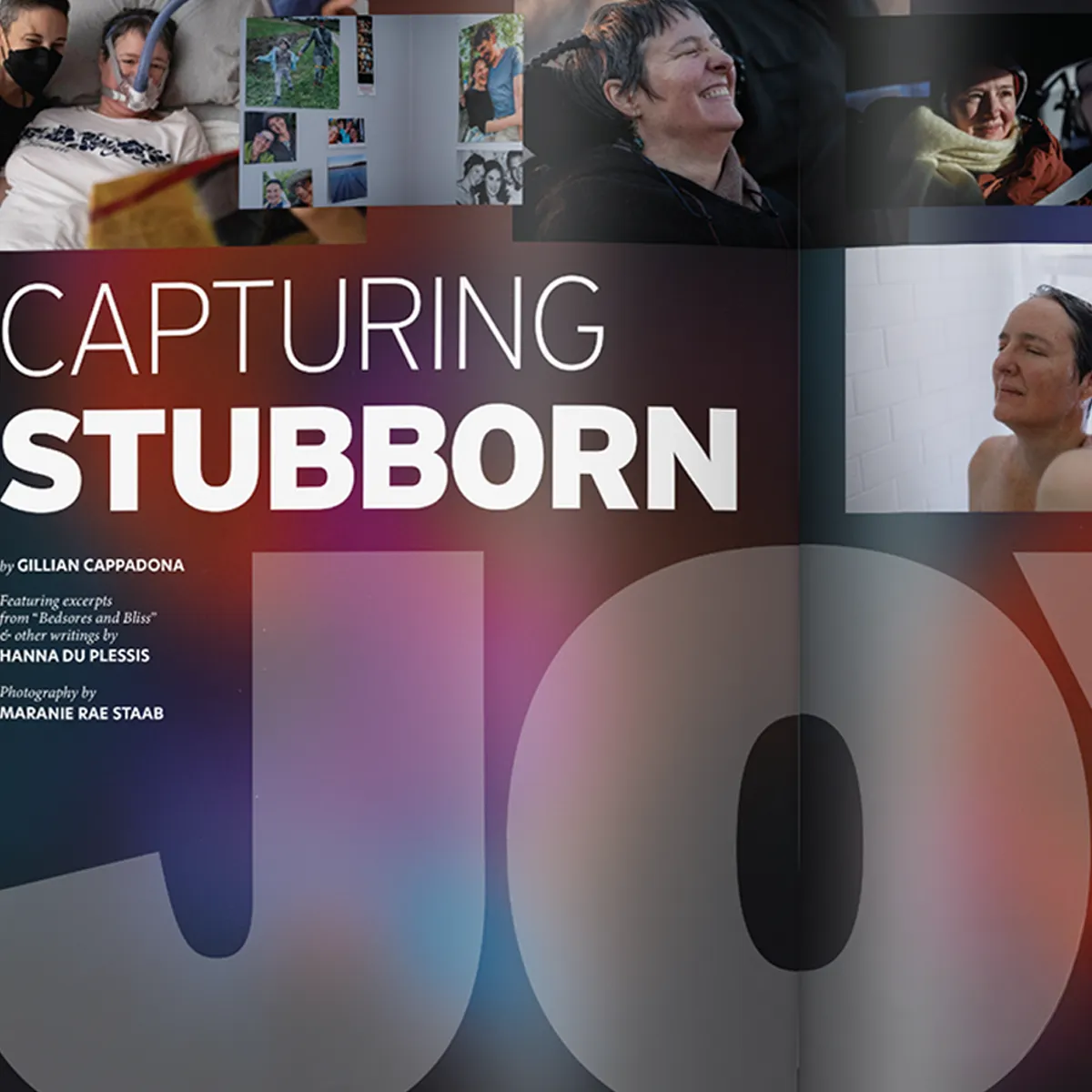
YNST Magazine dedicated a feature spread to Hanna’s story—not as tragedy but as testament. “Capturing Stubborn” documents how an artist continues creating, a writer continues writing, a teacher continues teaching even as ALS takes mobility, voice, independence.
The article, written by Gillian Cappadona and featuring photography by Maranie Staab, explores what it means to celebrate life while dying. The images show care in action: hands holding, bodies supporting, community showing up. Hanna in costume for a parade. Hanna laughing. Hanna being held. The visual story refuses to sanitize or sentimentalize—it shows the whole truth.
Through an artful marriage of Maranie’s images with Hanna’s words, the article carries the theme of “stubborn joy:” this isn’t about dying. It’s about living fully in whatever time remains.
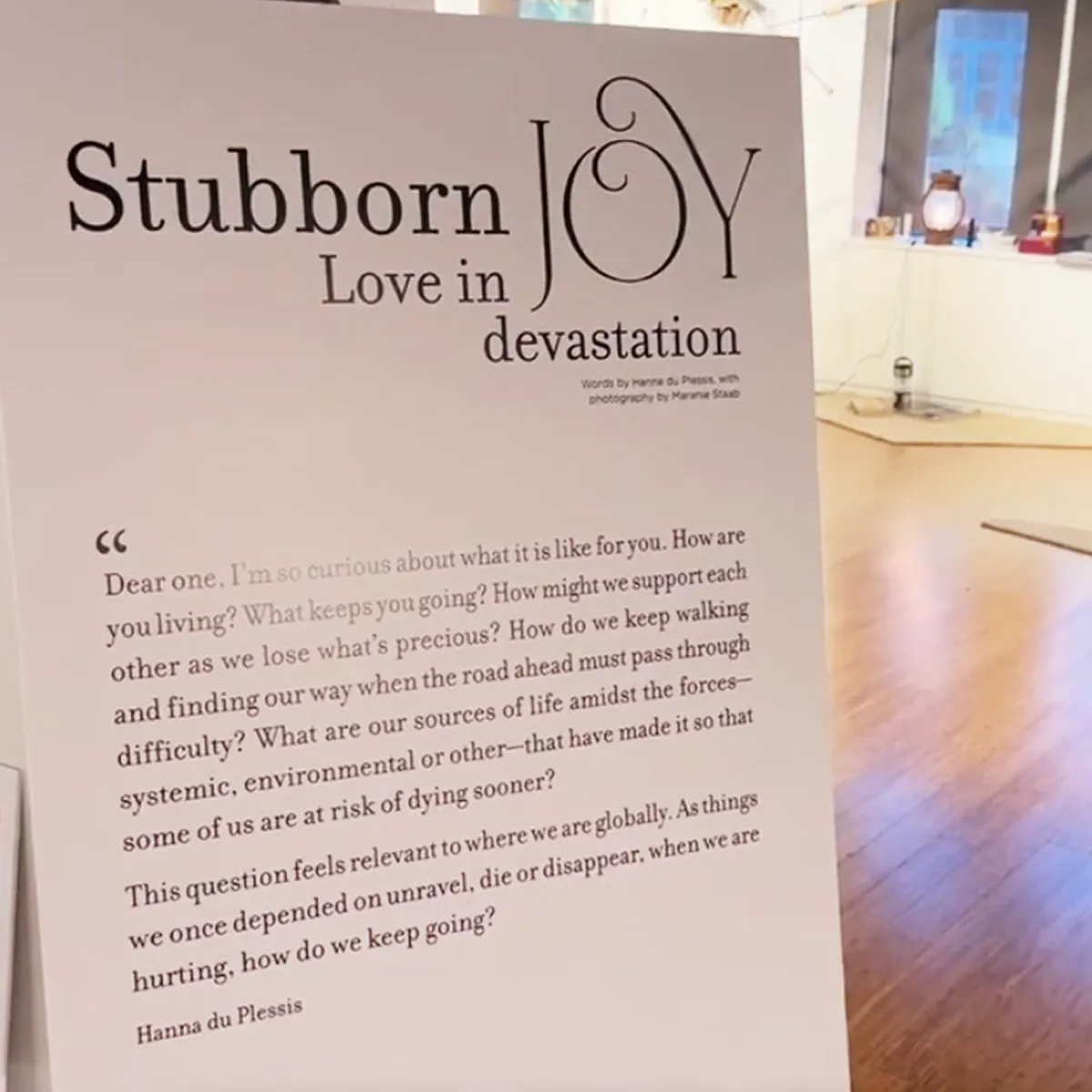
Photo Essay: Stubborn Joy
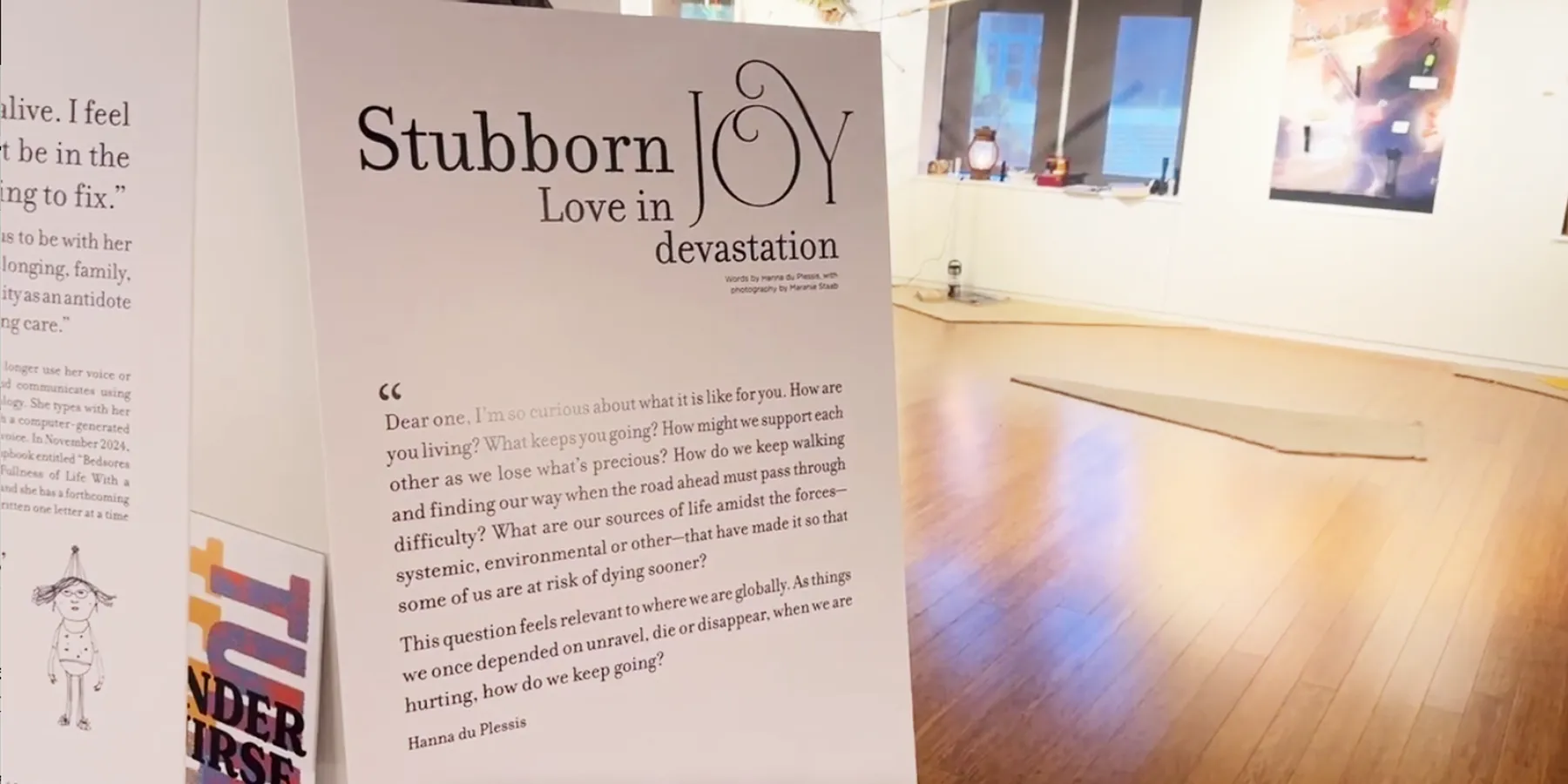
PHOTO INSTALLATION & ESSAY
Stubborn Joy: On Death and Dying
Stubborn Joy: On Death and Dying
Robert Smith Gallery | Social Documentary Network
Summer 2025
"We have such little practice in allowing the grief to undo us, in trusting that the undoing will re-weave us into something larger."
What does it look like to live fully while dying? Photographer Maranie Staab spent five months with Hanna and the Careforce community—the chosen family providing round-the-clock care—documenting what she calls “love in action.”
The work pairs Maranie’s images with Hanna’s own words about the experience of ALS. Not clinical observations but lived truth: being packaged like a surfboard at night with pillows, silicone stickers, sheepskin, ventilator mask. The magnetic pull toward being held. The longing to bury her nose in a rosebush one more time. The cat of loss purring on her lap as she watches the world continue without her.
Hanna writes:
“Part of dying is being vividly alive also. I feel stripped of my filters. Please just be in the moment with me. There is nothing to fix.”
The gallery asks the question that matters:
“Dear one, I’m so curious about what it is like for you. How are you living? What keeps you going? How might we support each other as we lose what’s precious?”
Maranie’s photographs show the answer—people showing up, bodies holding bodies, community as constellation. This coordinated selflessness born of genuine care provides “an example of what is possible as we ‘walk each other home.'”
The work has been exhibited both online through Social Documentary Network and as a physical installation at the Robert Smith Gallery in Pittsburgh (June 2025). Maranie continues documenting Hanna’s community on her Instagram feed.
Video: Practicing a New Way of Being (TEDx)
VIDEO
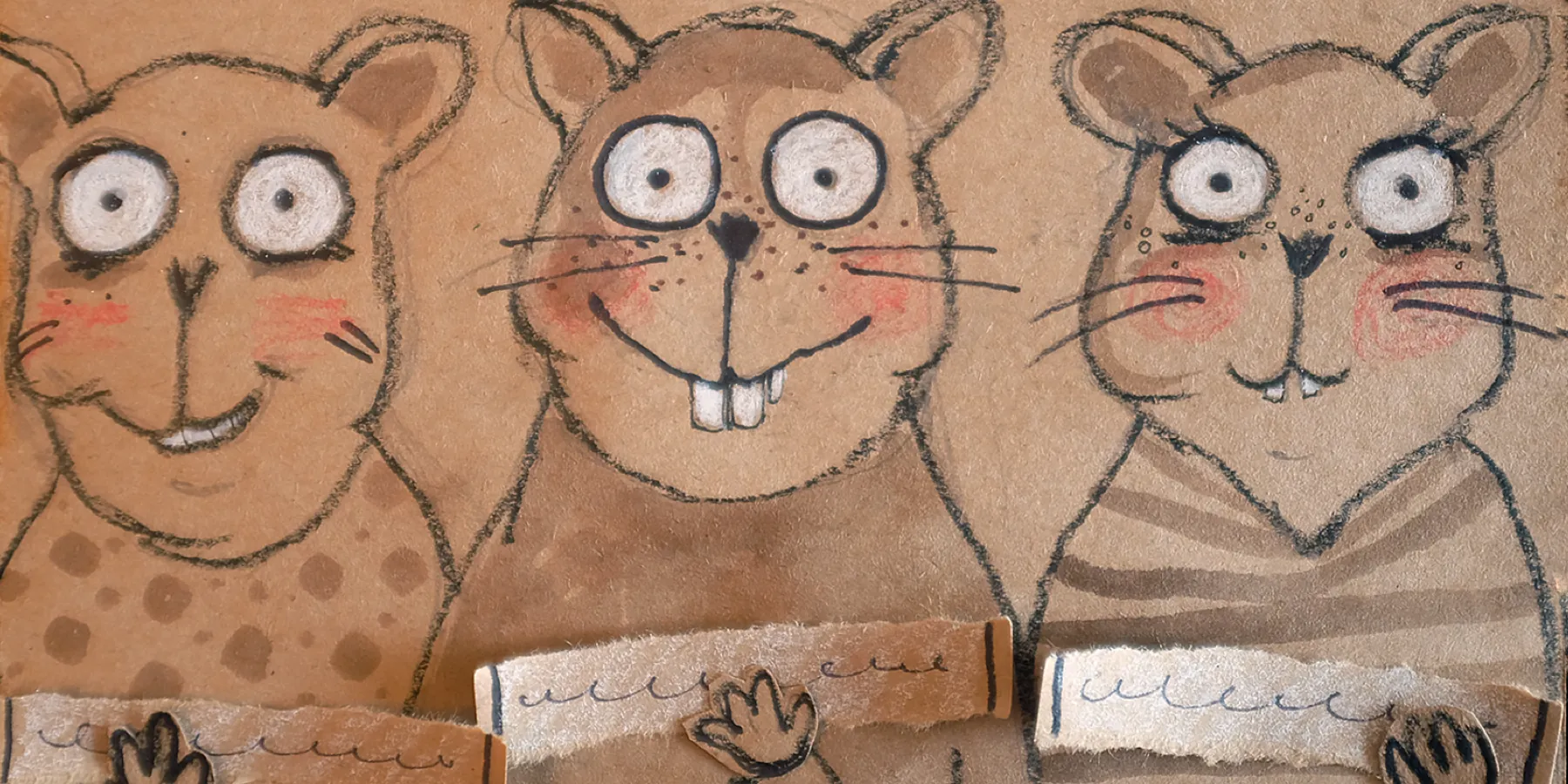
Hanna at TEDx: Practicing a New Way of Being In The World
"The future, the better future that every one of us longs for is not some dream in the sky, it's an unwritten script. And each of our lives are a line inside that script."
Are we as a species doomed to repeat our patterns? Power-over, displacement, exploitation, harm? Or can we practice our way into the possibility that we are the world—which means we can change?
This is Hanna’s invitation from the TEDx stage. Not external change (new continent, new career, new relationship, PC to Mac). Real transformation. The kind that requires meeting what she calls “monsters”—limiting beliefs, fear, past pain and trauma. The crossroads where we choose: resist or avoid and stay trapped, or move through discomfort toward something new.
The talk moves through stories that land with humor and punch. Animal welfare workers discovering they’d “had it wrong.” Managers naming their fears instead of buckling up. Students making art from the painful patterns inherited through generations. Each one an example of what becomes possible when we stop deferring hope to outside forces and engage the difficult work of becoming.
This talk happened before Hanna’s ALS. Before terminal illness made transformation urgent. But the invitation already contained everything: “I want to invite you not to run. And not to numb. When you feel the pain coming up, don’t go to overwork or peanut butter or whiskey. Feel the pain.”
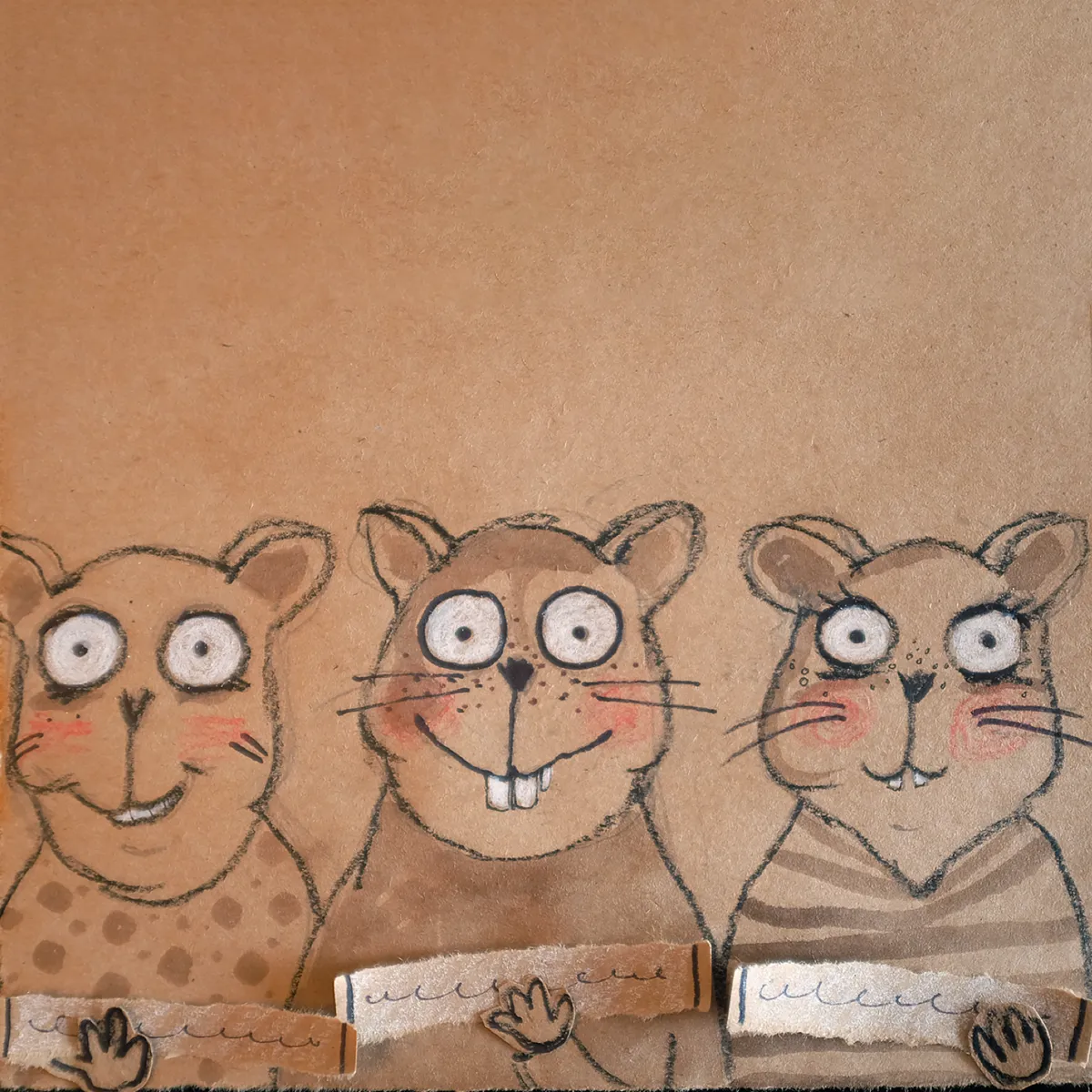
Hanna painted the slides for this talk herself—images full of deep playfulness partnering with serious ideas. (These paintings are the basis for a future illustrated book.) The whole thing demonstrates what she teaches: we can choose to practice, a little at a time, the skills that help us stitch together a better world.
Video: Grappling With Acceptance
VIDEO & TRANSCRIPT
Hanna at Creative Mornings: Grappling With Acceptance
Grappling With Acceptance
Creative Mornings Pittsburgh
May 2023
"I don't want to die before I'm fifty from suffocation, just like I don't want to live in a world that devalues life—taking it with a knee on a neck, a chokehold on a train, a bullet in the back."
Can you accept what you cannot change? Should you?
Two months after her ALS diagnosis, Hanna stood before a crowd of people—using a ventilator to breathe, friends to speak her words when her mouth ran out of stamina—and asked the audience to practice making gross noises with her. To cup their hands behind their ears if they couldn’t hear. To breathe through the tears that were coming, the 90% forecast for crying.
Then she took them through her own attempts at acceptance: the white-knuckled forcing of it after divorce, the fury-filled throwing of snowballs at a frozen pond while screaming “I hate this!”, the desperate scampering through past mistakes looking for what she did wrong, the moment of asking “Is life worth living with ALS?” What follows is unflinching and tender. Personal and political. She refuses to separate her dying from the world’s dying—extinct species, melting glaciers, people silenced to avoid harm.
Near the end she asks:
“How do we feast on this precious gift amidst the pain, loss and hurt, and extend that life-sustaining-force outwards? How do we say yes to the mess and co-create with it?”
Her answer is, practice. Not acceptance as embrace, but practice as showing up: allowing space to rage without getting stuck there, bringing devastation into community, trusting each other to hold us, resting into life’s abundance.
This is a masterclass in holding shadow and light together.
Published: Bright Green Box
FLASH NONFICTION
"Bright Green Box" on Short Reads
"This morning it sits on my dining room table, reminding me that I am dying and that I am not doing my best to keep living."
Sometimes the most devastating writing comes in the smallest packages. In under 300 words, Hanna captures the impossible mathematics of dying well: the clear plastic tube for tongue exercises, the bright green respiratory device she’s supposed to use three days a week, the finger stretches to prevent curling, the shoulder holds to prevent freezing. All these prescribed efforts to slow what cannot be stopped.
This is flash nonfiction at its finest: complete, devastating, and somehow still full of life. The precision is surgical. The humor is dark. The heartbreak is complete. Short Reads published it as an original piece, recognizing what editor Hattie Fletcher and the team saw—writing that makes you see the world differently in two minutes.
About Short Reads
Short Reads is a literary magazine that showcases original essays, work that appeared only in print or in now-defunct publications, or that the editors are excited to bring to a new audience of readers. They publish in hope that the work they feature will help readers think about something a little differently or see the world through fresh eyes, and come back changed.
Interview: A Conversation About Mindfulness
INTERVIEW
A Conversation with Hanna About Mindfulness
I Am Here Now, I Trust My Wise Heart
Beginner’s Mind series
Interviewer: Emily Mohn-Slate | August 2025
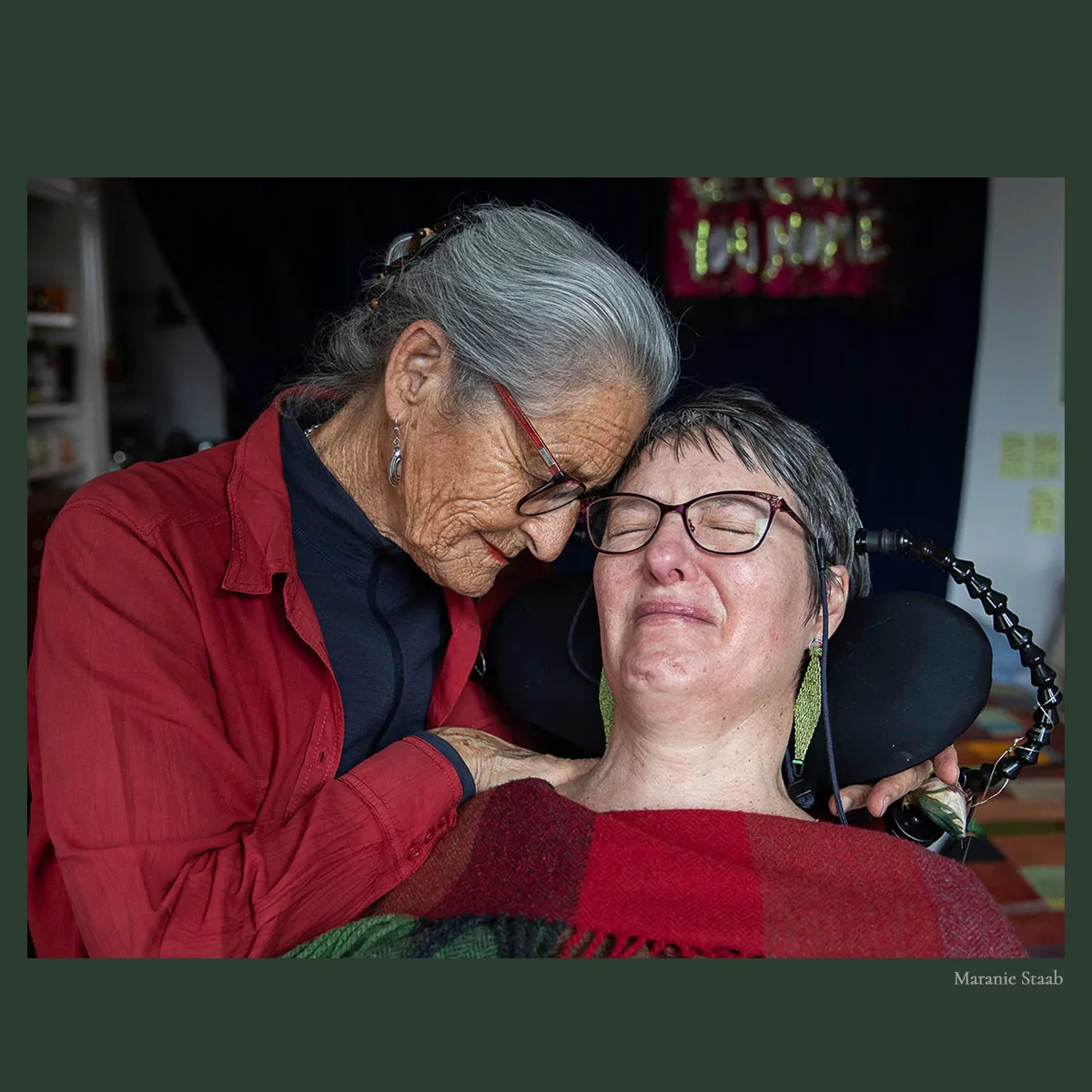
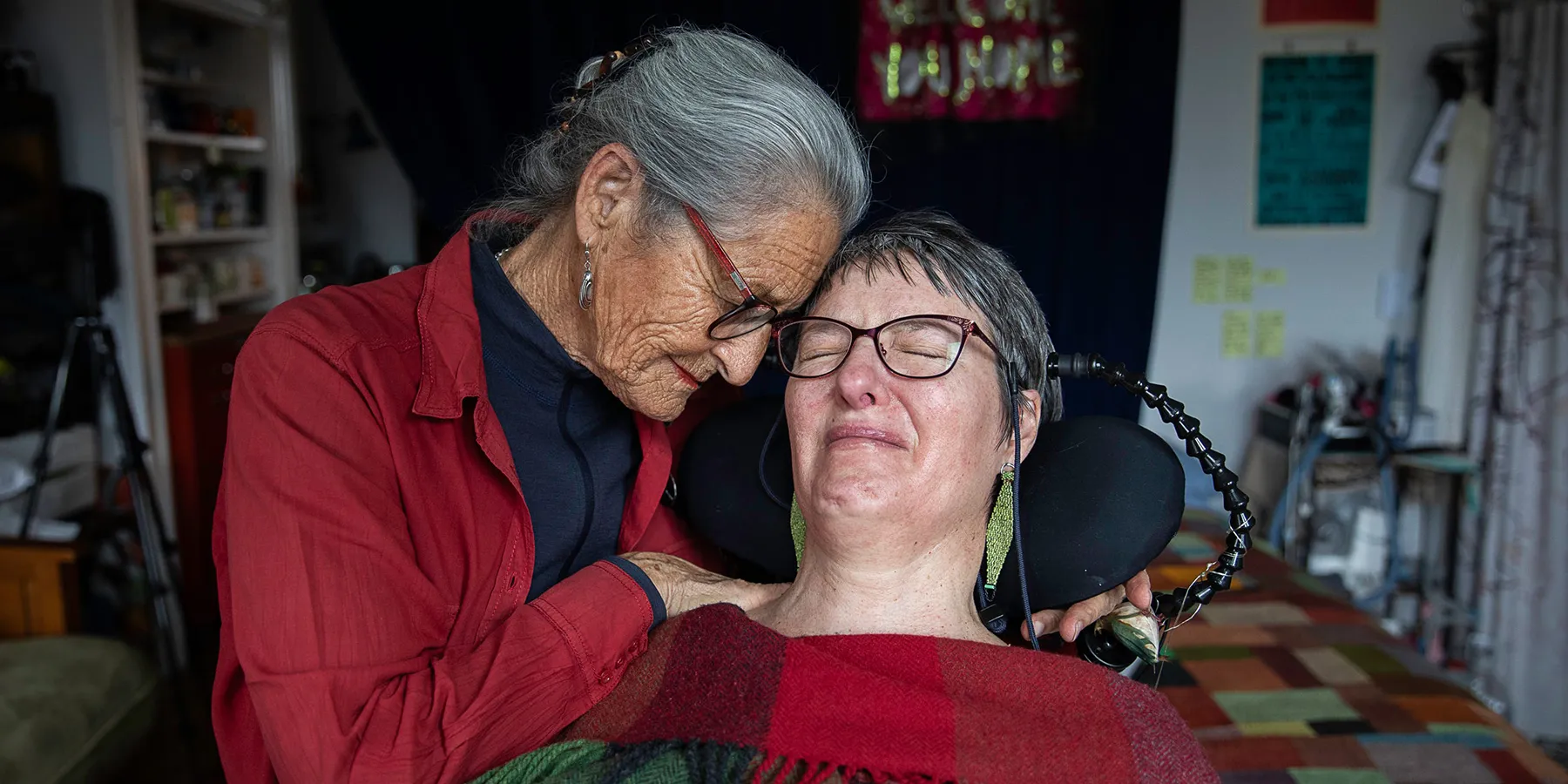
Photographs: Maranie Staab
"I have a belief that the pressure of suffering, if welcomed, can turn you into a gem."
How do you practice presence when your body is betraying you? When anger rises during botched transfers from wheelchair to bed? When the structures keeping your shadow self hidden go limp and you hurt the people who get up at 4am to care for you?
In conversation with poet, essayist and teacher Emily Mohn-Slate, Hanna offers practices forged through years of learning to face difficulty: phrases repeated like rosary beads to interrupt anguish, visualizations for welcoming fear without resistance, the radical softening into What Is. She writes with unflinching honesty about wilting—psychologically as well as physically—and about practicing love for herself and for people who have harmed her.
This interview offers gift after gift: concrete practices, hard-won wisdom, and language for staying human through suffering. Emily Mohn-Slate writes that reading Hanna’s work changed her life. This conversation shows why.
Podcast: A Conversation About Grief
PODCAST
A Conversation with Hanna About Grief
The Grief of Grappling with Terminal Illness
Untethered to Rooted podcast, Episode 5
Host: Dana Daugherty | May 2024
"Grief is not a monolithic experience that will demolish you—it is a gorgeous part of life. Making us more whole, more connected to each other. It opens us to aqueducts of sustaining joy."
What does it mean to grieve well? Hanna and psychotherapist Dana Daugherty sit together exploring this question. Not theoretically, but from inside terminal illness. This is a conversation that refuses easy comfort. Hanna speaks about the crushing weight of grief and also its trustworthiness. About yelling into the woods while a friend watches for cars. About letting go of her bicycle and weeping with her partner. About the two arrows—the unavoidable pain of loss and the avoidable suffering of getting lost in stories of unfairness.
She offers language for what’s often impossible to express: how community keeps grief from crushing us, how art transforms sorrow into something we can hold, how presence matters more than resolution. Near the end, she offers a blessing for anyone holding loss:
“I wish for you a sacred circle around your grief. One that protects you from anything that rushes in to falsely cheer you up, tempt you to minimize the magnitude of your loss, or hurry you into acceptance.”
This conversation offers depth for anyone navigating grief—whether mourning glaciers, cultures, or loved ones. It’s medicine for a time when so many bodies are suffering.