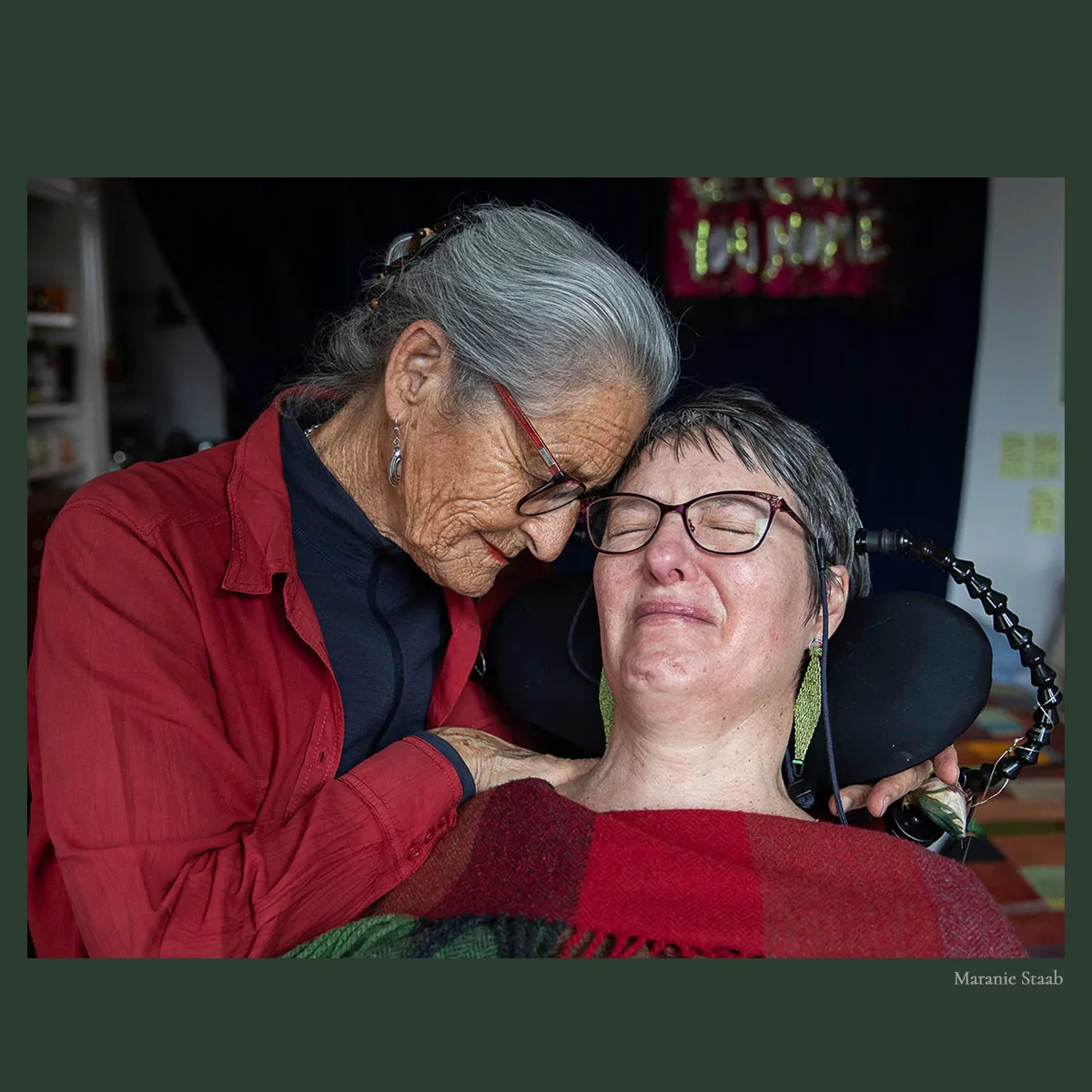
Interview: A Conversation About Mindfulness
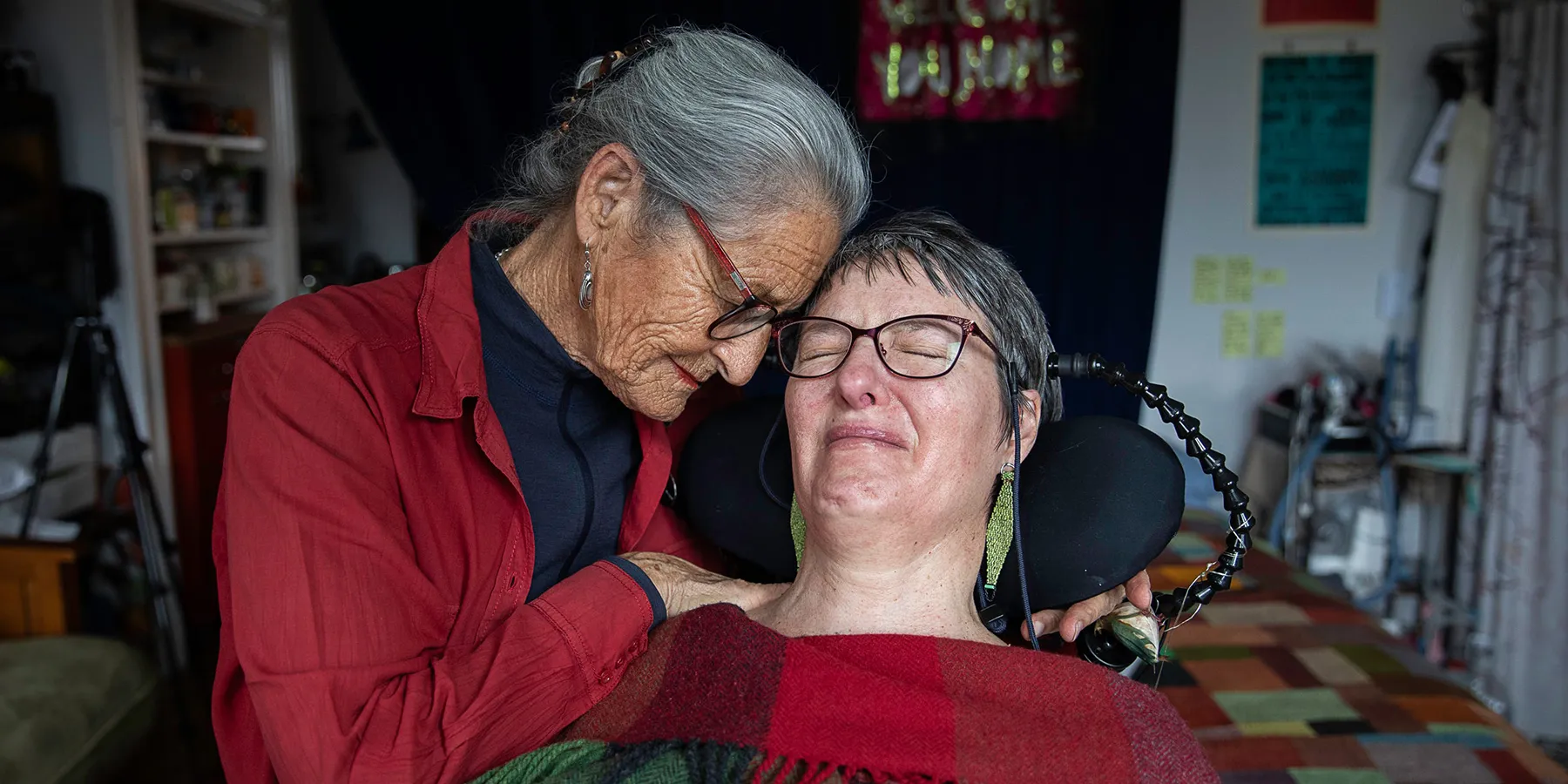
INTERVIEW
A Conversation with Hanna About Mindfulness
I Am Here Now, I Trust My Wise Heart
Beginner’s Mind series
Interviewer: Emily Mohn-Slate | August 2025
Photographs: Maranie Staab
"I have a belief that the pressure of suffering, if welcomed, can turn you into a gem."
How do you practice presence when your body is betraying you? When anger rises during botched transfers from wheelchair to bed? When the structures keeping your shadow self hidden go limp and you hurt the people who get up at 4am to care for you?
In conversation with poet, essayist and teacher Emily Mohn-Slate, Hanna offers practices forged through years of learning to face difficulty: phrases repeated like rosary beads to interrupt anguish, visualizations for welcoming fear without resistance, the radical softening into What Is. She writes with unflinching honesty about wilting—psychologically as well as physically—and about practicing love for herself and for people who have harmed her.
This interview offers gift after gift: concrete practices, hard-won wisdom, and language for staying human through suffering. Emily Mohn-Slate writes that reading Hanna’s work changed her life. This conversation shows why.

Podcast: A Conversation About Grief
PODCAST
A Conversation with Hanna About Grief
The Grief of Grappling with Terminal Illness
Untethered to Rooted podcast, Episode 5
Host: Dana Daugherty | May 2024
"Grief is not a monolithic experience that will demolish you—it is a gorgeous part of life. Making us more whole, more connected to each other. It opens us to aqueducts of sustaining joy."
What does it mean to grieve well? Hanna and psychotherapist Dana Daugherty sit together exploring this question. Not theoretically, but from inside terminal illness. This is a conversation that refuses easy comfort. Hanna speaks about the crushing weight of grief and also its trustworthiness. About yelling into the woods while a friend watches for cars. About letting go of her bicycle and weeping with her partner. About the two arrows—the unavoidable pain of loss and the avoidable suffering of getting lost in stories of unfairness.
She offers language for what’s often impossible to express: how community keeps grief from crushing us, how art transforms sorrow into something we can hold, how presence matters more than resolution. Near the end, she offers a blessing for anyone holding loss:
“I wish for you a sacred circle around your grief. One that protects you from anything that rushes in to falsely cheer you up, tempt you to minimize the magnitude of your loss, or hurry you into acceptance.”
This conversation offers depth for anyone navigating grief—whether mourning glaciers, cultures, or loved ones. It’s medicine for a time when so many bodies are suffering.